During Bob Bakish’s years as CEO of Paramount, the company licensed marquee properties like Yellowstone and South Park to third-party buyers in multi-year, eyebrow-raising deals.
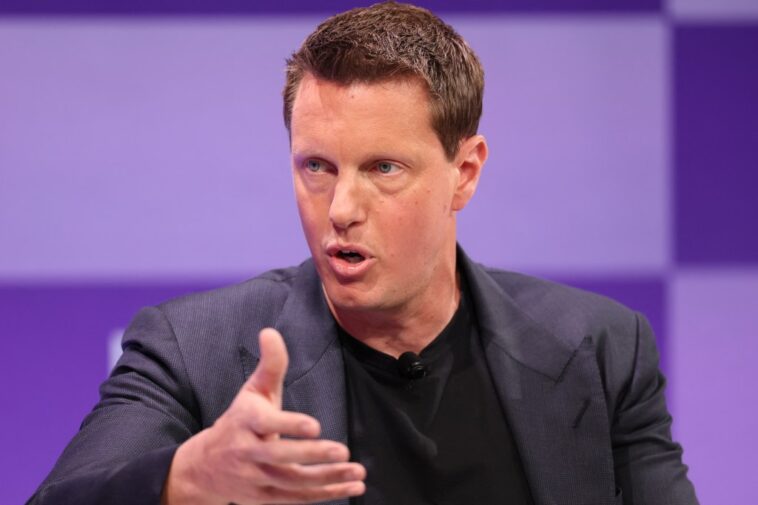
David Ellison, who took the helm of Paramount after its merger with Skydance last year, told Wall Street analysts Monday that the company will continue to sell rights to select programming “for the foreseeable future.” He emphasized that the company is not taking a “one-size-fits-all” approach, arguing the ability to keep third parties in the mix makes Paramount “much more desirable” to creative talent.
Ellison fielded a question on the topic during a 35-minute call with Wall Street analysts to discuss the company’s first-quarter results. In a letter to shareholders released prior to the call, the company touted the performance of Paramount Television Studios and CBS Studios. While some of its titles stream on Paramount+, PTVS had “several notable milestones” in the quarter including a limited-series order for The Corrections at Netflix and a third-season renewal of Cross for Prime Video.
The studio’s 2026 slate also includes new series like Ride or Die, Reacher spinoff Neagley for Prime Video; 12 12 12, Brothers and Neuromancer for Apple TV; and Hollywood Arts for Netflix. It also has new seasons of established series Reacher; XO, Kitty; Foundation; and Emily in Paris.
“We actually think that is an incredibly meaningful part of our business and and intend for that to to continue,” Ellison said of licensing. “There are certain series and shows that you’ll want to keep exclusively on your owned and operated platform. But there are other series that absolutely make sense to sell to third parties. I think one of the things that is surprising is some of those series, when they come back to your owned and operated platforms, will actually increase in viewership. So you really can’t take a one-size-fits-all approach to this problem. It really has to be evaluated on a case-by-case basis.”
For original series at the studios, Ellison added, “we’re in the business of being the No. 1 home for the most talented artists in the world. And when it comes to – take a showrunner, for example – it’s really critical to be in a position to where you are offering that particular piece of talent that you’re working with, the most opportunities to get their show made. And we think it is power from a platform perspective to say, ‘We can sell into our owned-and-operated, but if for any reason, it doesn’t make sense for owned and operated, we can also sell them to third parties.’ We own those shows, they generate revenue for us, and it also makes you a much more desirable place from a talent perspective.
The balanced approach, Ellison said, has “served us really well and we plan on that to continue for the foreseeable future.”


GIPHY App Key not set. Please check settings