
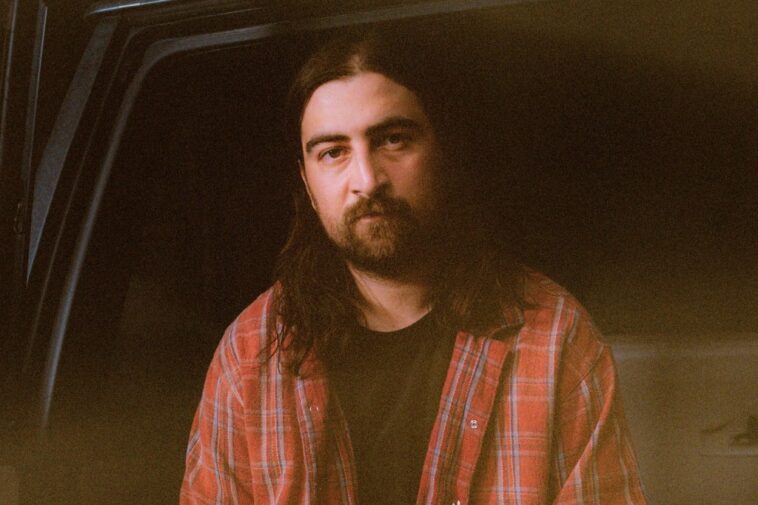
Somehow, it’s been four years since Noah Kahan’s career-shifting album Stick Season was released in 2022. It was the album that kept on giving: The deluxe edition, Stick Season (We’ll All Be Here Forever), arrived in 2023, and in 2024 Kahan dropped Stick Season (Forever) that spotlighted eight tracks with special features including Post Malone on “Dial Drunk,” Hozier on “Northern Attitude” and Gracie Abrams on “Everywhere, Everything.” That same year, he was up for best new artist at the 2024 Grammys, thanks in large part to the enduring success of the project overall.
And while 2025 was relatively quiet for Kahan, by the top of 2026, he was ready to return. At the end of January, he announced his fourth studio album, The Great Divide, and released its aching title track. “The Great Divide” became his highest-charting hit on the Billboard Hot 100, peaking at No. 6 (so far) and scoring Kahan his first chart-topper on the Hot Rock & Alternative Songs chart.
Kahan co-produced the new album, also teaming back up with longtime collaborator Gabe Simon and welcoming in acclaimed songwriter/producer Aaron Dessner. The set was recorded across Dessner’s Long Pond studio in upstate New York as well Nashville’s Gold Pacific Studios and a secluded farm outside the city.
In some ways, The Great Divide is a natural successor to Stick Season. Kahan’s knack for honest storytelling about exactly where he’s at in life is a well-developed strength that shines through here as he chronicles what it’s actually like to have an album change your life — for better and for worse. Across The Great Divide‘s 17 tracks, Kahan reflects on how success has impacted his relationships with himself, his family and friends, and even his home state of Vermont — and explores in gripping detail the discomfort of that disconnect. (These themes are even further explored in his Netflix documentary Noah Kahan: Out of Body, which examines his rise to fame and how he manages his mental health amidst so many changes).
While such an honest reflection is expected from Kahan, there’s a sonic grandeur to The Great Divide that sets it apart from any previous project. With its lush layers of instrumentation, full-bodied production and refined vocal tricks (like dipping into an emotive falsetto on second single “Porch Light”), the way in which this album spotlights musicianship — from Kahan and his collaborators — helps his storytelling hit even harder. As does the fact that the storytelling is multidimensional, with nearly every song taking on various perspectives, resulting in an album that is in conversation with itself — and leaving the listener with a multitude of entry points.
Still, true to form, Kahan was managing expectations ahead of the album’s release, taking to X in March to write: “What if the album just sucks so bad lol would be sad for me but lowkey funny considering the build up.”
But by April 22, just two days before its arrival, he veered from comedic self-deprecation to gratitude, sharing on the platform: “I’m in the exact same hotel room I was in when I played my show at MSG in 2024. Hard not to remember how insurmountable my loneliness and insecurity seemed to be in that moment of my life. I’m sitting here now smiling not because my album comes out tomorrow night or because I have ‘succeeded’ in any way since, but because I can live with being exactly who I am and I owe that all to you guys.”
Below, find our ranking of all 17 tracks on The Great Divide.
-
“Headed North”
“Headed North” brings back the familiar field noise that opens the album on “End of August,” and otherwise stands out for being a twangy, stripped-down acoustic track that sounds like it could’ve been recorded during a discreet busking session. Lyrically, it reads like a rambling, slightly self-conscious voicemail from someone who wishes they had more to say to the person they miss the most: “No, there ain’t nothing new to report/ But I hope you’re bored and headed north.” Kahan manages to convey the ache on both ends of the line, hinting at the guilt of being the one who left — and whose updates are likely a bit more meaty.
-
“Spoiled”
Naturally, after following a love song like “We Go Way Back,” Kahan has kids on the mind. On “Spoiled,” he wonders what kind of wealth he’ll raise his family to appreciate. “I’m betting on the north, to drag my ass back down to earth,” says Kahan. “Gonna be rich in our own way/ I swear you’re gonna get it, kid.”
It seems that a future family could be more of a near-reality than far-off musing, as in the middle of the track Kahan just might be soft-launching a break: “If I’m gone this time next year…F–k it I might even disappear, I hope you’ve had a decent time.”
-
“Paid Time Off”
Complete with a hummed bridge, “Paid Time Off” plays like a campfire tune that could just as well be a cautionary tale about never leaving home as it is an appreciation for small town living. “It’s been a damn near perfect day,” sings Kahan, “Just getting high at the outlet mall/ Most people grow up and they move away/ But you don’t care and I don’t mind at all.” He later admits that, “I had the brains for a city job/ But you got the taste of a country cop.” There’s a nonchalant acceptance to the song, which comes into focus when Kahan concludes that in the end, we’re all doing the same thing anyway: “making a livin’ workin’ for the paid time off.”
-
“Dashboard”
By this point in the album (nine tracks in), there’s been a fair amount of car talk: the act of driving, the manner of driving, the kind of car and what’s on the dashboard. Here, there’s a continued theme of crossing state lines and outrunning shadows, only Kahan has reached a boiling point. “You’re an a–hole,” he repeats (five times) throughout the track — and with more bite than anywhere else on the album.
-
“23”
Having “23” immediately follow “Dashboard” (on which Kahan repeats, “You’re an a–hole, after all”) cements a distinct link between the two. If “Dashboard” is about realizing who someone is and always will be, “23” is about working to accept that — and the challenge of letting go of who they once were, or who you hoped they would be. “If I never see you again, you could be anything I want. … It can all be the way that it was/ If you stay gone.”
Still, that’s easier said than done — especially with a reminder so prominently placed: “Tattooed your initials into my right arm/ So I’d see your name when I lift up a drink.” Whether Kahan wants this person out of their life or their memories, “23” hints at unresolved tension — and the willpower of one-sided closure.
-
“Dan”
If “We Go Way Back” is an ode to his relationship with his wife, album closer “Dan” is an ode to his best friend for similar reasons — they too go back, prompting a trip down memory lane for The Great Divide‘s finale. On “Dan,” Kahan attempts to verbalize the indescribable bond that stems from knowing someone over time by recounting memories both good and bad — “Hand around a Miller Lite, waiting for the sun to rise,” he sings, before later recalling, “Think I stood right here when Carlo died/ Said I hated the way I made it all about me.”
Kahan is now facing the fact that his life has completely changed — and that even a friendship like his with Dan isn’t immune. “Through the dying light of a flashlight lens, you tried to tell me how unfair it is/ That I have what I have and you got what you got/ Said I’d give it all back if I could, I cannot.”
With any divide, there are two distinct sides. But this is the great divide, and it’s songs like “Dan” that lead listeners to consider that it’s not so black and white. Across the album, Kahan reflects on how his relationships have been impacted by fame — including the one he has with himself — but it’s the album’s last few songs that begin to explore what a return could look like, if that’s even possible. Or if that’s even what he wants — or if he even knows.
And with such questions lingering, how could Kahan not write a fifth album?
-
“We Go Way Back”
While Kahan has managed to preserve and protect his relationship through his rise, “We Go Way Back” lets listeners into the bond he and his wife share: a comfort he can’t find anywhere else. “Saw the world from up close, it ain’t much to look at/ Compared to you in your work clothes, waving hello from the driveway,” he sings.
Throughout, he notes the sacrifices that come with his career, “the late flights and missed birthdays,” and expresses gratitude for having a partner he goes “way back” with. “You’ve seen me in places so low, you can recognize when it’s real bad,” he sings. But it’s the quiet of home that he appreciates most: “Out here, I can hear your heartbeat, I can hear the start of a long sigh/ I can hear the song of the robin, I haven’t written my own in a long time/ And it’s just fine.”
-
“Downfall”
The plucking, acoustic riff of “Downfall” offers exactly what it needs to: a no-frills backdrop for Kahan to express the exact kind of thoughts typically reserved for two best friends plotting against an ex. “I’ll keep rooting for your downfall,” he sings, but in typical Kahan fashion there’s a twist. Here, he’s not hoping or even expecting himself to emerge a winner, he’s hoping that they both lose — and as a result, deserve each other. “Call me when it goes to sh–,” he requests. “I don’t mind being your dead end.”
-
“Deny Deny Deny”
Despite the uptempo, even upbeat production of “Deny Deny Deny” there’s a long-simmering frustration at its core. As Kahan airs his annoyance about those who deny the past — or worse, don’t speak of it at all — he’s simultaneously letting it go. “I used to care to know your secrets,” he sings, later concluding, “I’m far too tired…Let’s just watch TV.” While “Deny” isn’t among the most lyrically dense tracks on the album, the catchy chorus, on which Kahan skillfully swings his voice into different registers, will surely warrant sing-alongs on tour.
-
“Haircut”
“Haircut” is an echo chamber of all the worst things Kahan has internalized — regardless of who said them, be it the internet, his family and friends or even himself. “You ain’t a goddamn hero now ’cause you cry on live TV”; “You grew your hair out long/ Now you think you’re Jesus Christ”; “Got bored…Left us for The New York Times“; “Spare us all the pity, love/ Save it for the microphone”; and the worst offender that closes the song, “We’re fine without you, baby.”
But through it all, he reminds himself on each chorus, “At least I got a soul still.” And as the song goes on, it becomes more and more unclear in which direction each jab is aimed or who is even throwing the punch — but that’s the point. It hurts all the same.
-
“Doors”
Sure, you could argue “Doors” is about opportunity — but the opportunity to leave. Throughout the track, Kahan explains that he keeps showing people doors to leave him through — or even to just see him through — sharing that he’s “trouble ahead” and “screams in his sleep,” even going as far as to list the many reasons “you should pack all your s–t up.” He later apologizes for jumping at the sound of rattling keys, assuming that his fear of being left is finally happening, despite suggesting that’s exactly what should happen.
It’s a fresh take on the trope of pushing someone away with the not-so-secret hope that they’ll see through it and stay.
-
“American Cars”
“I was working on a plan to disappear completely/ Gaslighting my friends into thinkin’ I was busy,” Kahan admits on “American Cars.” It’s a lyrically layered, profound track that is, in part, about feeling grateful for getting help at home, especially when, as Kahan says, “We’re drowning here, and I gotta stay for mom.” The song spotlights the sadness of a familiar cycle despite everything else changing — and how the subtlest reminders of time away can hit hardest. “Didn’t know you drove American cars,” Kahan sings, evidence of a disconnect. But no matter how much time has passed or how much has changed, the question remains: “We would talk so much, and it’s fine we don’t/ But can you come home?”
And spoiler alert: though unspoken, the answer is always yes.
-
“Willing and Able”
“Willing and Able” is the kind of chilling, hard-to-swallow song that could either become an emotional standout in a live show or relegated to the rarely-performed ranking. It sounds like a real-time battle between how Kahan sees himself compared to how he’s perceived by someone closest to him: “They all say you’re a light, all I see is a shadow/ And I’ll see you again in six months, when you need your next song.” The longer the song plays out, the more ambiguous the title becomes, while the cost of being both willing and able seems to add up to an unfair sum. That is, until the final line, when a compromise is offered: “If you’re willing, I’m able.”
-
“All Them Horses”
As the second-to-last song on the album, “All Them Horses” packs an unexpected punch for a track that comes so late in the game. For an artist as vulnerable as Kahan, the story he tells here manages to crack him open even more. Built around the memory of crying for “all them horses” in a long-ago hometown flood, Kahan recounts how they didn’t seem scared — and in saying so, admits that he currently is.
“Gonna dance around and sing about my pain/ Okay, it pays,” he says at the top of the track. “You know I wanna beat it, I wanna beat it bad/ Oh, everyone looks happy in a photograph.” For much of the song, Kahan talks around his mental health battle and how his career in the spotlight and away from home can intensify his feelings. It’s not until the bridge that he confronts it, admitting: “Maybe I’m manic again, but I think this time I’m out for good.”
Either way, he reminds himself again of the horses, and how regardless of their situation, “they did not look scared at all.” And each time he repeats the line, it becomes a mantra of sorts to guide Kahan through whatever comes next.
-
“Porch Light”
“Porch Light” is a shining example of how Kahan so seamlessly and painstakingly delivers the perspectives of those closest to him across The Great Divide. Here, it’s that of his mother, or any mother, who worries about their kid (so, all mothers) — and in Kahan’s case, the worrying is a specific strain that comes with fame.
With each verse, the exhaustion from it all becomes evident: “I would ask how you’ve been/ It’s all over the internet…It is not irrelevant that you stopped taking your medicine,” he sings on the first verse. “I hope you tell me that you’re winding down/ That whatever made you famous made you sick,” goes the second. And by the third verse, there’s a shift in tone, “You act like we just sit up here and wait for you to reappear.” Still, the sentiment is the same, that no matter what, she’ll always leave the porch light on — even at the cost of heartbreak each morning “when it’s me that turns it off,” realizing that her boy still hasn’t come home yet.
-
“End of August”
Opening with the perfectly-captured buzz of a warm summer night, “End of August” immediately places listeners at the close of summer. Beginning as an intimate piano ballad that over the course of its five minutes swells into a full-throttled goodbye to the season, the track already fulfills a promise Kahan made on X: “i do not care about the weather you will be sad this summer.”
With “End of August,” Kahan delicately dances through the conflicting emotions that the end of summer stirs, a time that brings about a premature sadness and longing for something that isn’t even over yet. It’s a fitting start for The Great Divide, as it seems a similar feeling shadowed Kahan’s rise through Stick Season — and now that it is over, he can finally try to make sense of it all.
-
“The Great Divide”
“The Great Divide” is one of those perfectly picked, highly-potent title track/lead single combos that manages to preview the entirety of the album’s 17 tracks while only scratching the surface. The swelling production signals the intensity of the song’s message (especially the raging, wailing guitar solo) and welcomes listeners into the leveled-up field Kahan now bats in.
Meanwhile, the gut-wrenching lyrics carry a knowing pain of anyone who has “inched across the great divide” or watched someone else, and suggest a maturation in admitting “You know I think about you all the time, and my deep misunderstanding of your life/ And how bad it must have been for you back then, and how hard it was to keep it all inside.” It’s an emotional cocktail of understanding, regret, forgiveness and well-wishing — and no matter if the message itself is too late, the release is right on time.