
This evening, Netflix unfurls the third edition of Netflix Is a Joke Fest, its sprawling, citywide comedy showcase that in just four years has become one of the buzziest gatherings of comedians in the world.
While this year’s edition has been condensed from 11 days to a more focused, seven-day run, the scale remains formidable, with more than 500 comics and 475+ shows set at venues all across Los Angeles, as part of this celebration of comedy in its many forms.
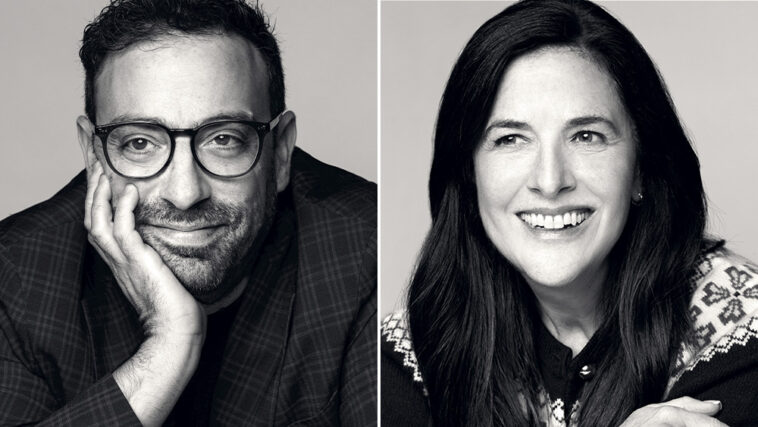
From the perspective of Tracey Pakosta and Robbie Praw, who oversee Netflix’s efforts in comedy, the shift is about recalibrating from a level of scale that felt “unnecessary.” This year, the festival leans into growth areas in comedy like live podcasting, while emphasizing cross-pollination between stand-up, film and television, and more.
A week out from the festival, Pakosta and Praw told Deadline about the “summer camp” vibe they’re going for this year, programming strategy, the place of Netflix in today’s comedy ecosystem, and more.
DEADLINE: How are you feeling as we head into this year’s festival?
ROBBIE PRAW: Feeling good. We’re excited. We do these things every two years, so when we get this close, we kind of can’t believe it. We’re really pumped.
TRACEY PAKOSTA: Yeah. And there’s so much good stuff that it feels like then you start thinking, what am I going to see? What am I going to miss? There’s so much stuff around the city that it’s hard to put it all together, but very exciting.
DEADLINE: How long have you been working on the 2026 festival at this point?
PRAW: I think we started to think about it right away after the last one. Obviously, you work on it very insanely. It’s a year of dedicated work, but I think we were brainstorming a few months after the last one. I can be more specific: I had a baby, and I remember when I came back from paternity leave, we started to talk about it. So I would say a year and a half.
DEADLINE: What are some learnings from putting together the first two festivals that have informed your work on the third? What did you love from past editions, and what did you want to change? You have now notably scaled back from 11 days to 7…
PRAW: I think that was the obvious thing for us. You’re getting this huge community of talent to come in, to all be in L.A. — and not only comedians, but people who work with comedians. People from around the world who work in the comedy business. Having it for that two weeks just seemed unnecessary, so that was probably the biggest pivot, was turning it into a week.
PAKOSTA: I also think that what becomes apparent is the bigger comedy ecosystem that we have here at Netflix. So being able to be inclusive of all of that, whether it be the scripted shows, a lot of the features… Our talent does many different things here and flexes different muscles. So how do we best take pride in that and give our talent the opportunity to get involved?
PRAW: That’s a good point. Merging very popular podcasts with some of our biggest shows, I think is a real fun development this time around. I think we have more music and athletes in the festival because that’s something that just organically happened last time, and we’re excited to do that. But yeah.
DEADLINE: Would you call live podcasts a breakout trend for year three?
PRAW: Yeah, there’s meaningfully more. We’ve always had podcasts. I think the real fun thing is connecting something like Giggly Squad with a show like Running Point, or connecting Bill Simmons with a show like Tires, and Trixie and Katia [from the podcast The Bald and the Beautiful] with Dan Levy representing Big Mistakes. I think that’s something that we’re really excited about, seeing how that unfolds this summer.
DEADLINE: What have you figured out in the last four years, in terms of ticket sales, and how to best structure a festival where you have so many big names, and so much going on all at once?
PRAW: I think as somebody who’s worked in the festival world for a long time, ticket sales work a little bit differently. What we’re seeing from our consumer base right now is people waking up, seeing things all around town saying that the festival’s coming, and starting to pick the festival shows that they want to go to, which is a little different than the typical behavior when you have a touring comedian coming to town, really just speaking to their fans. I think a joy about any festival, not just ours, is people experimenting. People picking the thing that they know they love the most, and then giving a shot to something maybe that they heard is cool, that they just want to try out, to take advantage of this being in their hometown.
DEADLINE: What is the company’s thinking around the festival in a financial sense? Is it important to make a lot of money off the festival, or are you more concerned with driving people back to Netflix?
PRAW: We have this crazy comedy ecosystem, and we’re very lucky that we’re able to pull it all together and show off our wares, if you will. One of the amazing things about stand-up on Netflix is if you look at the amount of people who in any given quarter just watch a stand-up special, it’s a tremendous number. But it’s really a collection of parts. And then when you dovetail — add the Running Points, the Tires and all of that — it’s just an extreme audience. So to be frank, this is more about celebrating a), what we have on Netflix, but also broadening that to the bigger comedy community. That’s really our priority here. It’s less about the business of it; it’s more about celebrating the comedy world…
PAKOSTA: And seeing all the comedians get to come together to celebrate each other, whether it be popping up in their shows, but also audiences that may watch Leanne Morgan’s special and not recognize that she actually has a series here. And the same goes for Shane and Tires, or Nick Kroll has a new show coming out, or Michelle Buteau. I do think that the ability to give visibility to the talent that we have at Netflix and allow them to celebrate one another is one of the things that makes the festival, the festival.
PRAW: I’ll just add, maybe I’m getting emo going into next week, but I just find it’s a real crazy privilege to be in the position here to bring this community together. It’s kind of like a summer camp. It’s just really fun to watch what happens to the comedy community when they all come together, and again, it goes back to why we made it one week. Everyone’s here — that never happens, especially in L.A. Everyone’s always on the road, and it’s just very cool to have everyone in one place. And right now, being behind the scenes and watching everybody, trying to jump on everybody’s shows, and that type of stuff is so cool to see.
DEADLINE: Are there plans for another big get-together with Ted Sarandos and all the comics?
PRAW: Yeah, we’re going to get everybody together and have a big comedy party. We’re excited about that.
DEADLINE: You alluded earlier to promotion of the festival. Has the approach to marketing this year been consistent with what you’d done in the past, as far as ad spend?
PRAW: I think what we’ve seen is that there’s so much energy going right into the end of the festival. So I think we were very conscious of really trying to capture attention this week, last week, and during the festival itself, along with a pretty significant campaign when we started to go on sale, and that is proving to be a great strategy that we’re happy about.
DEADLINE: How did you land on Kevin Hart as your roast subject?
PAKOSTA: I mean, look, Kevin is somebody that clearly we love at Netflix. He has been part of the Netflix family for a long time, and it just felt right and fun and different to have Kevin be roasted this year at the festival.
PRAW: At a certain point when we were thinking about it, we’re just like, okay, well, we have this comedy festival, every single comedian is doing it. And listen, of course we’ve had other ideas and other conversations over the last year. But when it came to it, when we finally had to make the final decision, we were like, which comedian can we ask? Kevin was the first person on our list on that front and we’re lucky that he said yes, and then just pairing that with Shane Gillis… We’re starting to look at some of the scripts, and it’s magic. And the people doing the roast is also going to be phenomenal. It’s going to be a really special day.
DEADLINE: At this year’s festival, Hart also has tapings of his comedy competition series Funny AF, which will air live on Netflix. The show seems to embody an opportunity for talent incubation — to help up-and-coming comics build toward something — which seems more difficult to come by these days, at Netflix and elsewhere…
PRAW: It’s so exciting. As somebody who came from the Just for Last Festival, that’s sort of the world that I lived in. Watching this show work and these comedians having an opportunity, you’re right, it’s very difficult in the landscape for that to happen. And quite frankly, back to your first question of why Kevin Hart, it’s because he’s singular in that way. He came to us and he’s like, “I want to do a show that gives comedians this opportunity.” And even as you see the way that we approach the roast, it’s very stand-up forward as well. It’s just something that he really believes in. Secondly to that, we have another showcase at the festival at the Comedy Store on Monday that is going to be one of the things I’m the most excited about that’s going to feature some young comedians, too. That’s the most fun we have in our jobs, when a comedian that folks don’t know gets the opportunity on our platform, and then gets to do great scripted shows and other things. So it’s so exciting to see that it’s resonating with folks.
PAKOSTA: I agree with you when you say that the discovery piece has been missing, giving the audience the opportunity to discover somebody and get super passionate about them and watch that grow over time. When I watched Kevin on that show, you could sense his passion for it and how much he loves it, and I do think it’s contagious, even for people that may not think they like watching that type of show. I think one of the many reasons it works is because of him.
PRAW: That show would not have worked as well if it was the type of show that we were developing that it’s like, who could we get to host it? It was very much something he felt was missing, and he crushed it.
DEADLINE: Why have we seen a recent dwindling of projects like Verified Stand-Up which served as a showcase for young stand-ups?
PRAW: The honest answer is it’s tough to get the viewership. When we did The Standups, the first season of it — this is I think eight or nine years ago, our first version of a multi-comic show — the numbers were massive. And if you look at who was on it, it was Nate Bargatze, Nikki Glaser, Fortune Feimster, Deon Cole. But we quite frankly stopped seeing great numbers for that. We want opportunities like that to be really winning for stand-ups, and if they’re not, we’re going to work on other ways of finding the opportunities. We’ve ended up doing more of these freshman specials from people like Derrick Stroup, and that’s how we’re getting it done now — less in the multi-comic way.
DEADLINE: You announced Dave Chappelle’s participation in the festival at a pretty late stage — why wait until the last minute?
PRAW: Well, we’ve obviously known for a while that Dave was going to be doing this event, but I think we were just figuring out what exactly the show was. We’ve locked on something very exciting and we wanted the show to be ready for when we finally announced it. And I think it’s going to be obviously one of the big standout hits of the festival.
DEADLINE: What has been the hardest decision you’ve had to make in putting together this third festival?
PRAW: For me, it’s whether or not I would personally do the 5K race [hosted by comedians Tom Segura and Bert Kreischer]…I’m going to do it. [Laughs] I don’t know. I’m very grateful because this company is very supportive of us giving stand-ups this great platform throughout the week, so I don’t know that there’s been a particular decision. I’m looking to see if there’s something that I’ve complained about, but I don’t know. I don’t feel that way about it.
PAKOSTA: I do think it goes beyond just the creative side. I think as a collective, as a company, all of the teams have to work and communicate so well with one another that we can talk through when something tricky or difficult comes up. But at the end of the day, I think we’re all after the same thing. So there hasn’t been anything specific that’s led to, “I wish we would’ve.” I think we try to just be like, “How can we get there?”
DEADLINE: What is your perspective on the role Netflix plays in today’s comedy ecosystem? What is the importance of comedy to the company?
PAKOSTA: Comedy plays a significant part in our business, and we all believe in the talent that’s here and look at it in a much bigger way. I do think these incredible specials have led to amazing scripted series, and there are more in the works. I think we view what we do from a place of passion, and that means being in business with the best talent that’s out there, and we’re lucky enough to get to do that in a very big way that resonates around the world.
PRAW: The festival is a great example of a manifestation of that because you have people who, maybe they did a Netflix special four years ago. Maybe their last special was on YouTube or Hulu or Amazon or HBO. But at the festival, these things are still playing on Netflix. So I think it feels great that even when folks do projects somewhere else, to a lot of those artists, this still always feels like a part of their home, which is a pretty cool thing.
DEADLINE: Do you have any predictions for the comedy marketplace in the next three to five years?
PRAW: I think it’s going to continue to be really strong. We’ve seen the artists that are emerging — it’s pretty exciting. We used to talk a lot years ago about, is this a boom? [About] comedy in terms of this trend. And now, I think it’s just a part of the culture.
I think things ebb and flow. I think comedy movies are going to come back in a big way.
PAKOSTA: People want to laugh and connect and enjoy one another, and that’s why I think comedy’s going to continue to thrive. There is a sense of community amongst the talent that resonates in a bigger way because I think laughter is the one thing that we all agree can connect us. That comes in all different forms of storytelling and talent and all of that, but I think it’s going to remain big and continue to thrive.