

Precious Jacobs-Perry, a Chicago-based partner at the law firm Jenner & Block, says Chance the Rapper “has a reputation that precedes him in in this city” for both musical excellence and business acumen. After representing Chance at trial against his longtime manager Pat Corcoran, Jacobs-Perry says she can confirm that this reputation holds true.
“He is a man of principle,” Jacobs-Perry tells Billboard of Chance, adding that the rapper “is in control” of several businesses that “all start and end with him. He takes his role seriously, not only as an artist, but also as the head of all these different businesses,” she says.
The business activities of Chance (born Chancelor Bennett) were the subject of the rapper’s Chicago court battle against Corcoran, commonly known as Pat the Manager. Corcoran sued in 2020, alleging Chance owed him nearly $4 million in commissions, including under a so-called “sunset clause” that he said should have gotten him paid for three years post-termination. Chance maintained that there was no such sunset clause, and the nearly $11 million he paid Corcoran over the years was more than sufficient
What made this case so novel was that Corcoran and Chance never had a written contract; they always operated under a handshake deal. While this sort of casual arrangement is common in artist-manager relationships, there’s very little settled case law about how to interpret oral contracts. This meant that after years of litigation, a judge ruled the dispute had to be decided by a jury. That jury ultimately sided with Chance after a two-week trial last month, rejecting all of Corcoran’s claims.
Chance also won on his counterclaims for breach of contract and tortious interference, which alleged that Corcoran took kickbacks and improperly structured business dealings to benefit himself. The one point of loss for Chance was that the jury awarded him only $35 on these counterclaims. In a statement following the verdict, Corcoran’s lawyer Jay Scharkey said, “We respect the jury’s decision, but the message to music managers is clear: Get it in writing. The jury award of $35 speaks to how seriously the jury viewed Chance’s case.”
Jacobs-Perry says this $35 award was out of $98,000 Chance was seeking, not the $1 million number that’s been floated in some reports. She also notes that Chance’s financial damages could be significantly boosted following another mini-trial on a remaining breach of fiduciary duty counterclaim, which must be decided by a judge rather than the jury under the law. This second trial, scheduled to begin May 27, could see Chance walk away with as much as $11 million from Corcoran.
Related
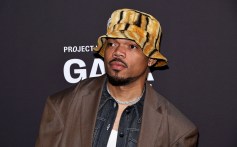

“We don’t want people to think that it’s not worth fighting for your rights when you believe that you’re being taken advantage of,” says Jacobs-Perry of why she thinks these counterclaims are important. The attorney discussed this and more during an extended interview with Billboard.
This conversation has been edited for length and clarity.
What pieces of evidence do you think were most crucial for the jury to return a verdict in your favor when it came to that sunset clause?
We had two pieces of critical evidence that I described as smoking guns in this case. First, Pat himself wrote a five-page email in March of 2014 to Chance’s lawyer detailing what he believed the agreement was. What was missing? The alleged sunset and post-termination provisions. Then in 2019, he again wrote to Chance’s lawyer when they were thinking about restructuring. He wrote, “To date, here’s what we had.” It was 15% of net. That’s it. Nothing about a sunset. Nothing about a post-termination provision. Never writing down anything about any obligations that would extend beyond his termination.
We had those two critical pieces of evidence regarding what he believed in real time the agreement was. And then we had Chance’s testimony that he did not agree to this kind of provision and explaining why he, as an independent artist and someone who believes that artists should own their art, would never have agreed to any of that. And I think putting all that together, what the parties actually agreed to in 2013 became very clear.
You also won a verdict on your counterclaims against Pat for breach of contract and tortious interference. What pieces of evidence do you think led the jury to reach that conclusion?
There were a couple of different buckets. One was his website, chanceraps.com. Pat registered that in his name back in 2012 or 2013, which is a complete violation of their relationship, because that is Chance’s website that was being used to conduct his merchandise business. The second bucket was merchandise vendors. Pat was picking a vendor and then saying to the vendor, “I’m going to bring all this business to you, including Chance’s business, and I want a kickback.” If it is your job to negotiate the best price for an artist, then the fact that you’re negotiating this kickback for yourself inevitably means that you are not then negotiating the best price for the artist on the merchandise.
Related
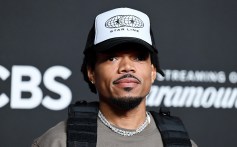
The other bucket was a movie deal where Scott Bernstein, who was the producer for Straight Outta Compton and Respect, featuring Aretha Franklin’s story, came to Pat as Chance’s manager to figure out a project that he could do with Chance, and [Pat] cut himself into that deal. And so instead of it being a 50-50, split between Mr. Bernstein’s company and Chance’s company, it then became one-third, one-third and one-third, including Pat and his company. Pat’s position was that there was nothing wrong with any of this, that he should be able to do these things, and that the evidence did not support that they were a violation of his duties. The jury decisively said this was not the case – that a manager, when you are interacting with third parties, your goal should always be to act in the best interest of your principal. And the testimony and the documents showed that was not happening here.
Do you still view the jury’s decision on the counterclaims as meaningful even though they awarded only $35?
What came out of that decision was very critical: Managers and other third-party agents will be held accountable if they are out in the world doing things outside the purview of their artist and things that are not in that artist’s best interest. And the jury was very decisive on that. They said, “You breached the contract because you were engaging in this behavior, and you violated the law because you tortiously interfered with Chance’s business relationships with third parties.” That was a decisive outcome, and I think it’s an important one that should be focused on, especially when you talk about precedent.
What potential damages remain for Chance’s breach of fiduciary duty counterclaim against Pat, which still needs to be decided by a judge?
This is why this case, I believe, is so important and precedential for third-party managers and agents: What you risk is a full forfeiture of the compensation you have been paid during the time that you were breaching your fiduciary duty. During that entire time, Chance paid Pat over $11 million pursuant to a handshake deal because he is a man of his word and he did honor his agreement. Chance even paid him almost half a million dollars after he was terminated. And so now what we have is a jury who has determined that he breached his contract with Chance, and we have a determination that he engaged in tortious conduct.
In Illinois, agents are fiduciaries. And so if during the entire time you were breaching your fiduciary duties to your principal and your artist, then that entire amount is at risk — so the over $11 million. It may seem harsh, but in the state of Illinois, that’s our public policy. But the judge gets to decide the extent and the time period he finds that he was breaching his fiduciary duties. It doesn’t have to be the entire period, even though that is what our position would be based on how the evidence came out at trial. The court will get to decide whether it’s everything, or whether it’s some smaller portion of the whole.
On a more personal level, what was it like working with Chance as a client?
He is an incredible human being, and I am very impressed by his decision to stand on principle. Because being an independent artist means so much, and because it is so important that independent artists and artists across the board be protected, he was willing to stand on principle and fight back against something that he absolutely did not agree to. To stand up and say: Managers, you can’t retroactively try to insert complicated provisions into an agreement that were not agreed to. At his core, he believes in this. He’s spoken about how the industry has historically treated Black artists across the board. And so this was so important to him – it was correcting history. Just because you want to take something doesn’t mean you get to do it. He is a very impressive individual. I literally take my hat off to him for standing on principle for not only himself, but doing something that will have an impact on others who someday someone may take advantage [of]. We have someone who stood up, and now there’s precedent for saying that these things are wrong.

