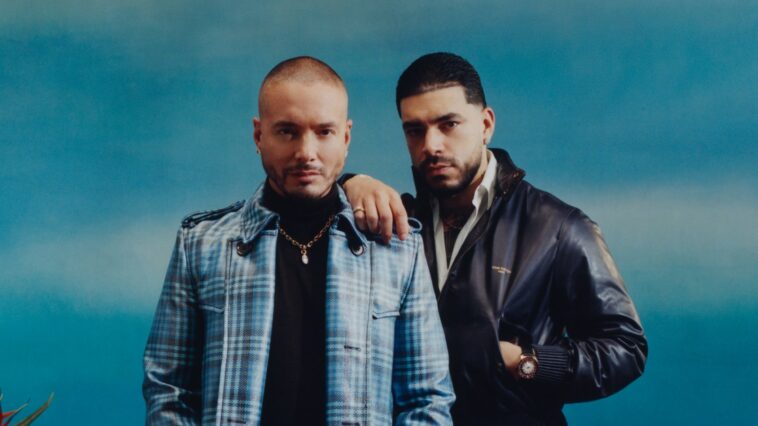
J
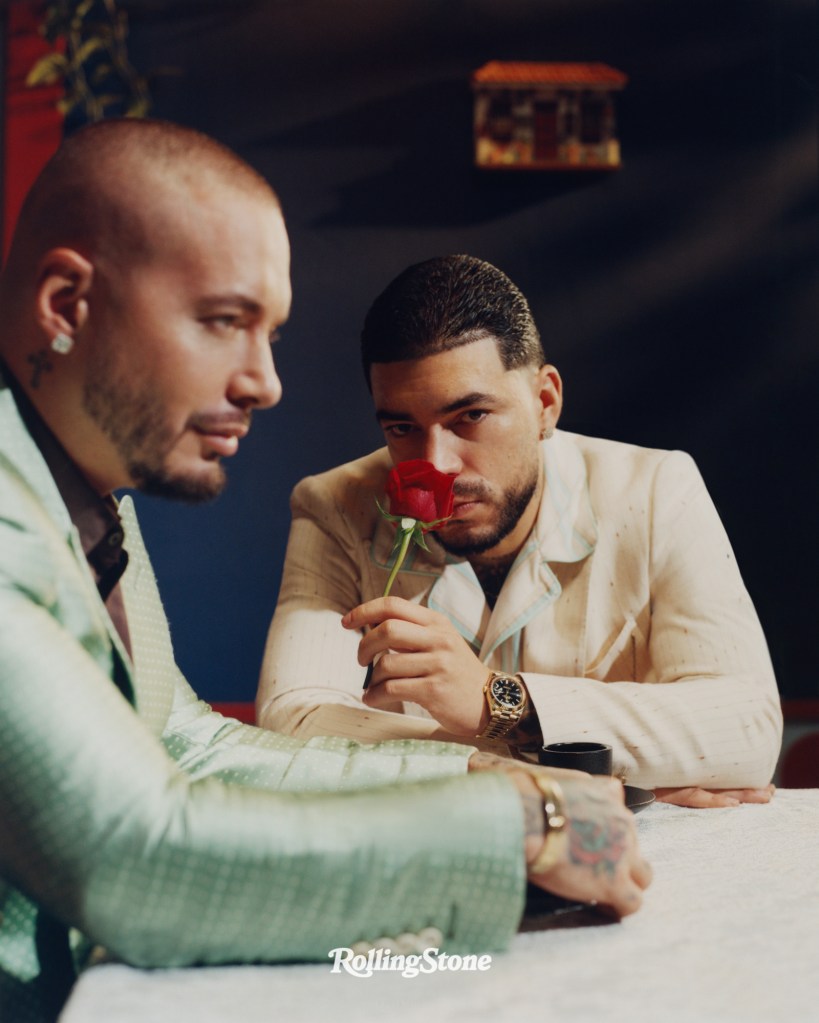
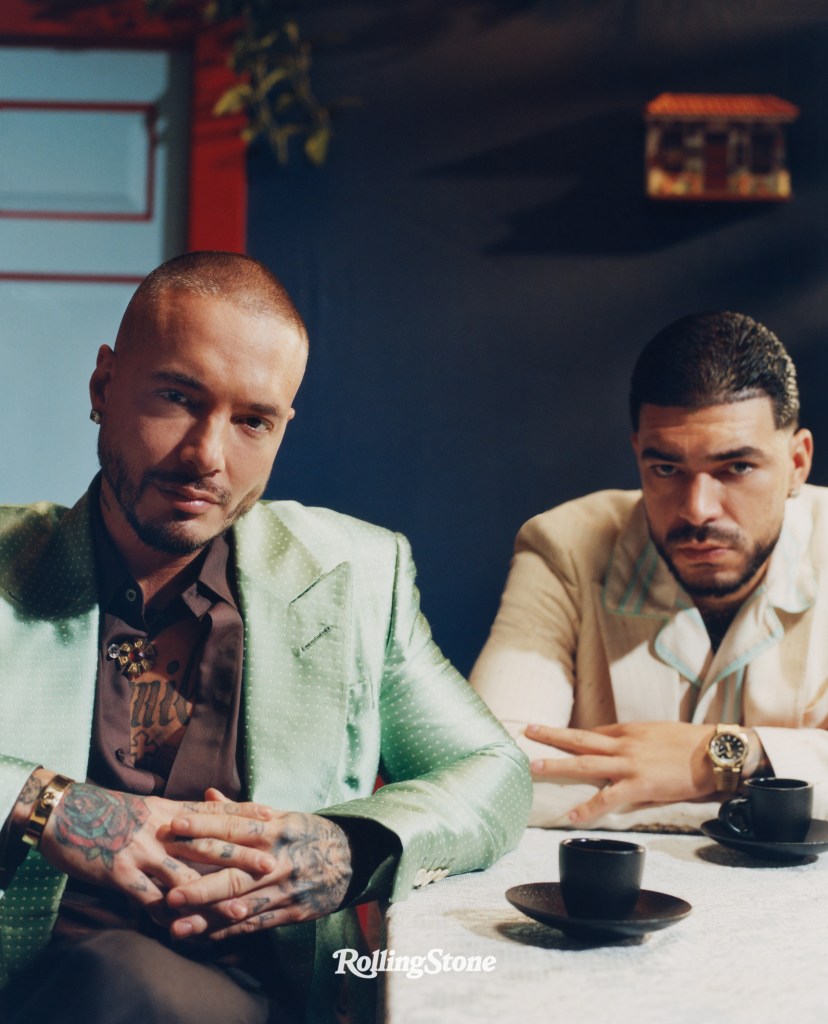
Balvin and Ryan Castro have been awake since 5 a.m., but if they’re tired, there’s no way you would be able to tell. By mid-morning, the two Colombian stars are dressed in impeccably tailored suits on an unusually scorching April day in New York, dancing to reggaeton music blasting through a pair of speakers. As they gear up to talk about their joint album, Omerta, for the first time, they’ve made the occasion a full-blown, impromptu family gathering.
Their large crews have joined them, milling around the set, all while the guys dive into what this project means to them and how it’s brought them together as two forces in the industry. “I never had the chance to find a partner from Colombia to make an album together,” says Balvin. “We have a really beautiful relationship that became family.”
It’s been nearly five years since the pair first connected, but their friendship seemed inevitable. For the past decade, Balvin has been one of the most prominent voices in Latin music, helping to elevate heavyweights like Bad Bunny and Karol G. He’s often credited with turning Colombia into another hub for música urbana, effectively showing the world Medellín’s more romantic, melodic take on the genre.
His global reach has gotten the attention of major stars like Beyoncé, who jumped on Balvin’s “Mi Gente” remix in 2017 and invited him to perform the smash hit during her historic Coachella set the year after. Then, he captured the attention of mainstream U.S. audiences when he hopped on Cardi B’s “I Like It,” alongside Bad Bunny, earning his first Number One hit on the Billboard Hot 100. Since then, he has paved a path for new acts from Colombia, guiding them as they make a name for themselves.
One of those rising artists is Ryan Castro, the 32-year-old whose bold timbre has taken over música urbana since he first came onto the scene in 2020. After spending time with his mom in Curaçao, Castro infused his reggaeton with the Caribbean flavors of dancehall for a unique sound that’s won fans over in Colombia. In 2024, Castro was tapped to make the official Copa América anthem, and he rose to the challenge with the energetic “El Ritmo Que Nos Une,” which instantly blew up online. The song racked up tens of millions of streams on Spotify and more than 100 million views for the nostalgic music video. This year, he sold out Medellín’s 45,000-seat Atanasio Girardot stadium for a blowout homecoming bash celebrating his 2025 albums Sendé and Hopi Sendé. Throughout all of it, Castro’s road map to success has always been Balvin. “José’s career inspired so many of my own stories,” he says. “I’ve always looked up to him as a benchmark, a true role model here in Colombia and for Latinos everywhere.”
Ten years his senior, Balvin has taken on the role of Castro’s big brother, helping him navigate the industry and bringing him out on major stages. A week after we talk, the pair will join Karol G at Coachella for one of the biggest displays of Colombian pride on a global stage.
Watch the video interview below
Omerta, out on Balvin’s birthday May 7, feels like a natural progression of their close friendship. Over a collection of 10 tracks that move through rock, dancehall, and, of course, reggaeton, the album traces the trust that Balvin and Castro found in each other. The LP takes its title from the Italian phrase for a code of silence, and while the Colombian musicians have leaned into the Mafia aesthetic for their project, the main tenet is not about glorifying mob life. “We call this album Omerta because it’s about family and taking care of ourselves and our people,” Balvin says.
In the conversation below, the two go deep on their friendship, how their connection shaped the album, how they’re disrupting the current state of Latin music, and what they’ve learned along the way.
You guys are getting ready to release your collaborative album Omerta. What inspired you to work together on a full project?
Balvin: In this game, it’s hard to find real friendship. You have a lot of peers, you have a lot of colleagues, but it’s a business where you deal with a lot of ego. Some artists are afraid to see other ones grow up, and that’s not the way I see life. I like to embrace my people. If I can use my platform to elevate them and make a little shortcut. That’s always my mission. We have a really beautiful relationship. We became family, and that’s why we call this album Omerta, because it’s about family and taking care of ourselves and our people.
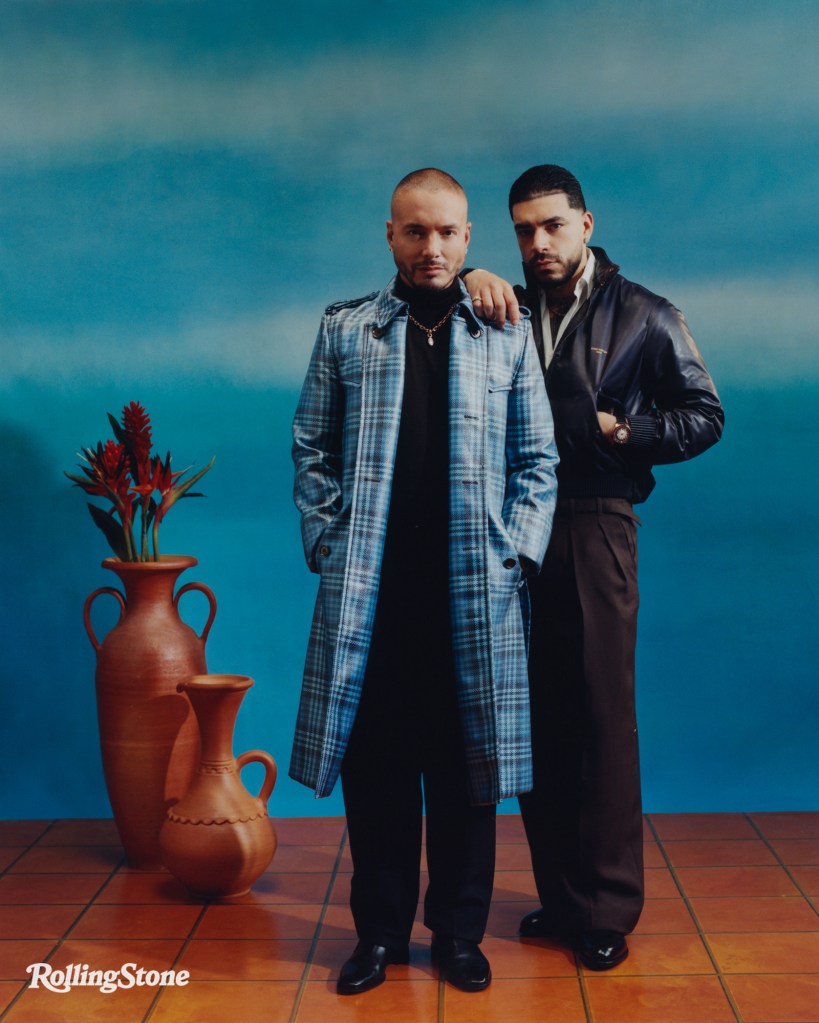
You guys describe each other as family, and your son even calls Ryan “Uncle Ryan.” I’m interested to hear how you guys first connected.
Balvin: It took time because in my career, I have seen a lot of things, good and bad. It’s not easy to find pure souls. When I met Ryan, I told him, “If you really want to be part of our family, loyalty is our number one rule.” It wasn’t like, “Oh yeah, I just met you, and we’re family.” Family is really important, if not the most important thing in life, [and so are] the people that you choose.
When I met Ryan, I was like, “This guy, he reminds me of where I started.” He did what he had to do. He started rapping on buses and then going to [perform at] schools and universities. He has what it takes to be a hustler in this game because nowadays people want to just go viral. [But] he has the foundation, the credibility of the streets in Colombia. He still has a lot of things to do, which is really exciting.
Castro: José and I talked over Instagram, and we linked up after that. I remember we went to [the label] offices after it turned out that the guys on José’s team were actually listening to my music. We hung out for a while there.
Balvin: They were superfans.
Castro: The foundation we had was one of mutual respect. I have so much respect for Balvin and his journey, and his respect for my music and everything I was doing, and from that a friendship grew between us. We didn’t go into it thinking, “let’s make music,” or anything like that. Instead, our mindset was simply, “Let’s get to know each other, hang out, have a good time” and from there we became family … Getting to know him, that alone felt like a dream come true. But now that he’s my parcero (bro), that’s a whole other level of special for me. It has always been a pleasure to spend time with him, to make music together, and to be family.
What was that first session in the studio like where you guys started working on Omerta?
Balvin: Oh, the best. I started drinking four years ago.
Castro: I had him drinking. [Laughs]
Balvin: We started making the album here in New York. We were just having fun and drinking. We never thought about an album. We were just like, “Let’s have fun.” And that’s how Omerta started. No pressure. That’s why it became so amazing.
Castro: We were basically just having fun in the studio with the whole crew, the guys, the producers, having a few drinks. We’d head out, catch a vibe and hit the club, or go to the beach … whatever felt right. We really just went with the flow and truly enjoyed ourselves. We enjoyed the entire album experience. It felt like a really special chapter. Beyond just the music or the visuals we created, it was really about the camaraderie, sharing that time with all the different teams, the whole family. We had a blast making it.
“We call this album Omerta because it’s about family and taking care of ourselves and our people.”
J Balvin
What did that creative process look like? Did one person start writing the lyrics and then somebody else started with a beat?
Castro: We had a couple of people helping us out with the songwriting, with all the different producers and such. But José and I were vibing, writing alongside the guys, coming up with a few verses ourselves. “That sounds cool, let’s throw that in, chimba.”
Balvin: It was really fast. But that doesn’t mean that we didn’t care about it. The vibe was so right that everything was flowing. Ryan is having an amazing moment [with] a different mindset than when I met him. We’re grown-ups now. We’re not kids anymore, and we have to embrace that and act like it.
Balvin: When we really got focused on the album, it took us maybe seven, eight days. We did three days in New York, and then we went to Turks and Caicos. He wanted [to add] his Caribbean side. He was raised there, so he’s like, “Bro, we got to go to the sea.”
Castro: Of course, so I could do some dancehall.
Balvin: He was absolutely right that we needed that time. We needed that flavor, that energy.
How did you get Sofía Vergara to star in the album teaser?
Balvin: Sofía Vergara is a really close friend of mine. She’s a person that I love and admire. It was just perfect to [cast her] as Ryan’s wife in the mini movie that we made. The energy between both of them is really fun. She’s super loud, and he’s more serious and laid-back. She has got to be the most Latina actress that has made this huge statement around the world, being so true to herself. You don’t see the difference between Modern Family and when you are with her. With her, it was basically like, “Open that mic and put the camera and just be you.” She’s one of the biggest icons in entertainment, period.
Castro: Super chimba. It was a really cool moment for me, and I know it was for José as well. As he says, Sofía is a very prominent Colombian actress, and for us, acting alongside her was an experience that went far beyond just the musical aspect. It was just being there with her and being able to experience her energy.
We really enjoyed the process of making the video with Sofía, just like we did making the “Pal Agua” and “Tonto” videos. It was something we dedicated a tremendous amount of time to, just to ensure people would really understand it. Nowadays, with the music industry moving so fast, people are shooting music videos in just two or three hours. We shot each video over the course of 15 hours. We poured a lot of love into it with the acting and the characters who came on board to keep adding layers to this Omerta film. Each video tells a very distinct story. As we’ve been saying amongst ourselves, we’re making cinema, which is something you don’t see very often in the music world these days. So, we really wanted to devote a great deal of love to it, and we genuinely enjoyed the process so much.
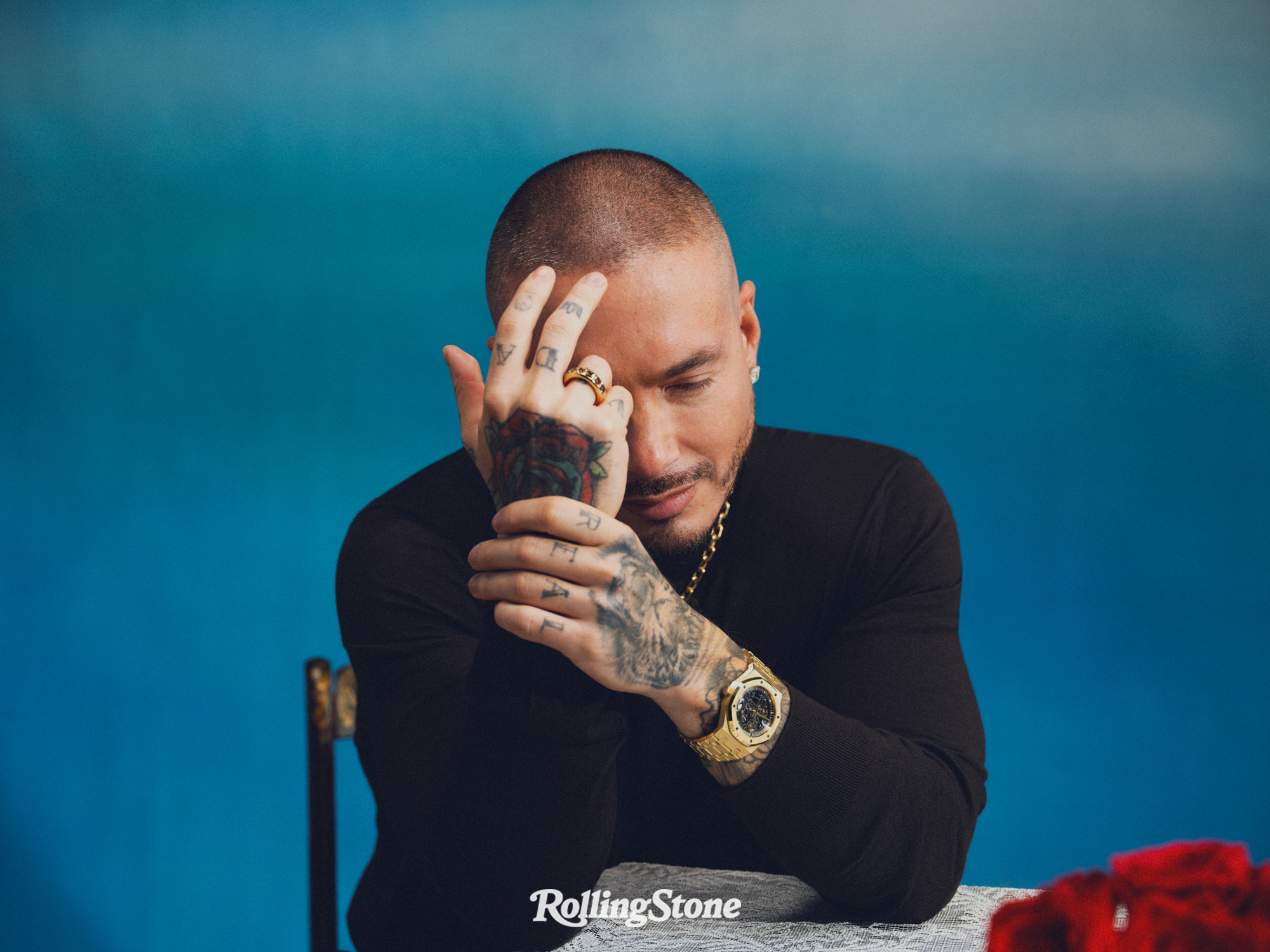
Balvin: Now with the AI world, which I love by the way as a tool that we can use, but we cannot lose the human touch. To have a camera in front of you where you express yourself is the way it should be, valuing the lighting and the DPs and every detail. I think people are going to start valuing real videos even more again. You can see when it’s AI and it’s cool. I’m not hating it, but the whole experience of making a video, it’s an art. I’ve been watching a lot of videos lately from the Nineties and the 2000s, too, and how beautiful the videos were at that time. Not even AI can make something that is as cool as that because you know it was human made. I want to keep doing videos like this because I think kids are going to understand and see the difference between AI and art.
How did the world of Omerta come together?
Castro: The foundation of the album lies in exactly what we’re discussing with the emphasis on family. It has a bit of a “gangster” vibe, but we wanted to bring the concept back to family. A true gangster is someone who works for his family, for his crew, for his people and maintains a tight-knit, familial circle. The deepest meaning behind Omerta is about upholding the codes of conduct among ourselves, of being a good brother, a good son, a loyal friend, a good father. That is essentially what we wanted to express in this album, presenting it with the elegance and style that we love to bring to our work. We essentially took the “omertà” Italian code of honor, but we adapted it to fit us and reflect our own way of life as Colombians. We absolutely love it because it also feels like a way of showing respect to the people, through the way we carry ourselves and who we are. It really is a very serious album, and we are people who project that same seriousness. That’s how we want people to see it.
“When bro doesn’t feel like singing anymore, I’ll take the throne.”
Ryan Castro
I also want to talk about all the different genres. “G WA,” is trap, whereas “Melo” is more rock. There’s reggaeton and dancehall, too. Was it important to explore a collection of different genres?
Balvin: I understand when artists make an album and it’s the same essence from the beginning to the end, but that’s too predictable. I like when you can be like, “Oh, this is different. Why did he take it to this side? And then now it’s a rock song like ‘Melo.’”
Castro: I like having fun with my music. I’m not very narrow-minded. I also feel the need to challenge myself and demonstrate my skills, and I feel like that shows my versatility as an artist. I think that shows on the album, that I like to do everything in the studio, just like Balvin.
On “G WA,” there is a line that goes “the Cadillac is full black/As if I were Donald Trump.” What does that line mean to you?
Balvin: You handle this one.
Castro: [Laughs] No, it was just a reference to the car, and that’s all. There wasn’t anything deeper to it. It has no substance whatsoever beyond the car.
On “Melo,” you guys reference Metallica. José, can you tell me a little bit about how they’ve influenced you?
Balvin: Metallica has been my favorite band since I was a kid. I love Metallica with my life, so I wanted to do a little shout-out. I think “Melo” is so original and different. I think people are going to be really surprised with the song.
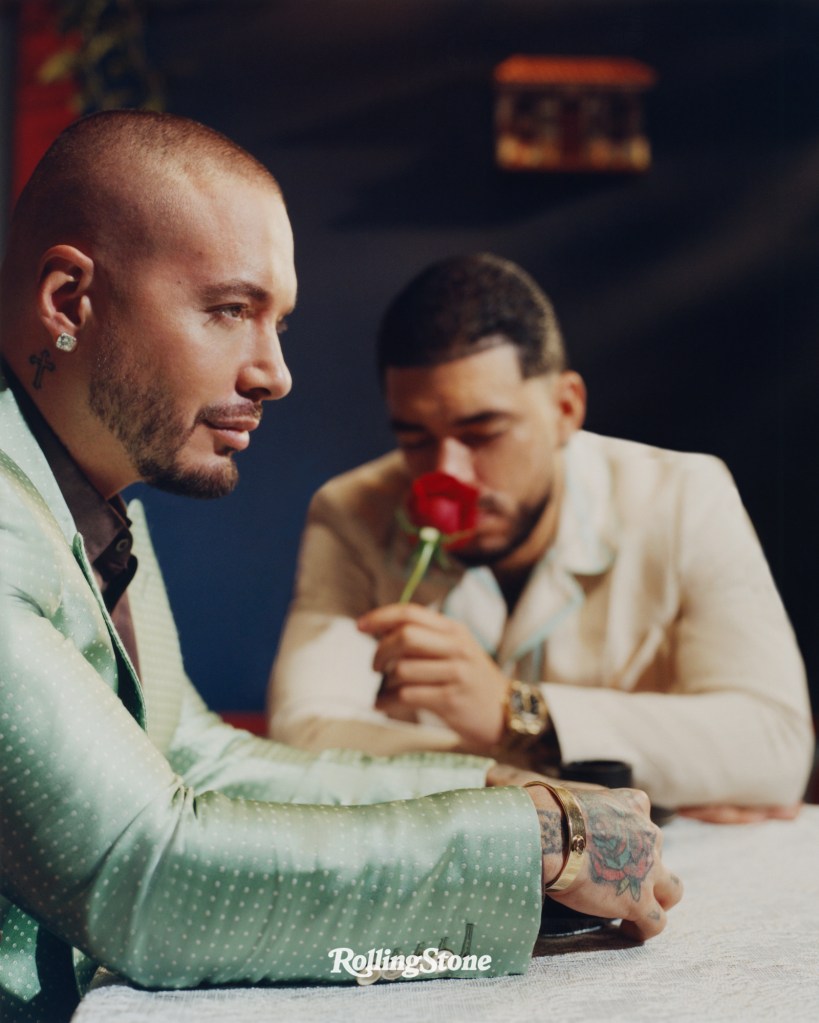
Omerta is so full of Colombian pride. Was that important to emphasize when making the album?
Balvin: Yeah, we are both from Medellín, Colombia, and we feel really proud of our heritage and how we grew up, especially in Medellín. Of course, we love Colombia, but we are so proud of our city. We feel that we definitely make a difference in our country, and I feel proud of us.
Castro: Being from Medellín, we share a great deal when it comes to music. Beyond music, we’re alike in our general demeanor. As folks from Medellín, Balvin and I possess a certain special charisma and share important core values. We work really hard. We follow our dreams intensely. We are the type of people who say, “I want this, so I’m going after it — no matter what.”
“When I met Ryan, I was like, ‘This guy, he reminds me of where I started.’”
J Balvin
Karol G, another Colombian star, was just on a huge stage, headlining Coachella. What did you think about her Weekend One set?
Balvin: I stayed up really late because I was here in New York, and I watched the whole show. I’m really proud of her. She’s also from Medellín, and the fact she is the first Latina woman to [play] the main stage and headline Coachella, it’s really beautiful. I saw her very beginnings. I saw every step that she did to where she is now. So I have a lot of respect for [her] discipline and courage.
Castro: It was awesome. Karol is a great representation for girls, for us, too, and for the city and the country. You can see the love and effort she puts into her work. She did an incredible job, and I know that everyone is going to enjoy Weekend Two as well. That is going to be awesome. [Editor’s Note: Days after this interview, Balvin and Castro were special guests during Karol’s Weekend Two headlining set to close out Coachella 2026.]
Ryan, you got your start busking on the streets. How did that shape your trajectory and connection with Balvin, who also grinded really hard for his music career?
Castro: I started from zero, nothing. If you can imagine, when I was singing on buses and streets, I would see Balvin singing all over the world. The fact that I can say that I’m here right now just feels like I made it. My story is really beautiful, and I always strive to use it as a positive message to motivate my fans and the people who follow and listen to me to keep chasing after whatever they want to be, whether it’s an artist, a dentist, a soccer player, whatever. Work hard and have the discipline to achieve it. It’s like, “Look, I was able to do it.” I was unfocused and did my things along the way, but I still pulled it off.
José, you said earlier that Ryan’s story resonates with your own.
Balvin: Yeah, of course. It reminds me of myself. We all had different types of hustle when we started, and that’s why I have so much respect for him, because he did the homework. He did every test that he had to do to be where he’s at right now. I think he’s ready for the next ones, because this never stops, you know? I thought that at the level that I am [at] right now, things were going to be easier, and I was going to work less, and it’s not like that. I’m working even more than when I started.
José, you’ve helped pave the way for some of the biggest acts in the world, like Karol G and Bad Bunny. How does it feel to continue to shape Latin music, especially now with Ryan?
Balvin: I consider myself a great A&R. I can always see the vision. I just have that, and that’s pretty much the reason why I’m with Ryan, too. He’s going to be the next one and at the level that he deserves to be. I feel really proud to see all my peers and colleagues being at the level that I always thought they deserved to be. [You know an artist has potential] once you listen to them and you see that there’s no one else that sounds like them, and they just have this color. This business is not about who sings more, it’s about who connects with the people.
What is it that you saw in Ryan that helped you identify him as something special?
Balvin: His style and the way he raps. We were missing that voice and blend of reggaeton and dancehall. I saw him and I thought, “He’s special. He’s got it.” He also earned the love of the people, especially in our country. That’s something that you cannot work for: You have it or you don’t. You come with this aura that makes people connect with you not just musically, it’s respecting the person and what they do and the way they treat people. At my concert, when we were playing the stadium in Colombia, you felt that when he came to the show, people didn’t just see the artist, they saw the person.
“I’m so inspired by Balvin’s career and what he’s done for Colombia and for Latinos.”
Ryan Castro
Ryan, when we talked for Rolling Stone’s Future of Music back in 2024, you said, “New Colombian artists can say we’re from the same land as Balvin and the whole world knows.” How does it feel to be releasing an album with someone who has paved the way for so many artists?
Castro: I’m so inspired by Balvin’s career and what he’s done for Colombia and for Latinos. Whenever I do something, I always tell him, “I’m following in your footsteps.” When he scolds me I also tell him, “Well, I learned from you.” [Laughs]. Nah, that’s just lies. He inspires me to make my mark on the world so that they not only recognize José but Ryan, too, so that the new artists who come along can say, “I come from the land where he comes from.” When bro doesn’t feel like singing anymore, I’ll take the throne. So it’s a pleasure to make an album with Balvin, to be his friend, and to learn from him not just about music but about life. In the music world, you have to have a lot of patience and know how to go with the flow. I’ve learned so many important things from him.
Both of you were at the 2026 Grammys for Bad Bunny’s historic win. What was it like to be there for that?
Balvin: It was beautiful because he deserves it. He has this talent that is undeniable; he’s like a unicorn. But he works for it; it’s not that it was one day to another. I saw him from the beginning, and it was beautiful to collaborate and do an album together like Oasis, so then to go to the Grammys and see him win Album of the Year and be with Ryan, [it was] full circle.
Castro: It’s a source of pride just to see him, but to be there, that was something else. It was such a pleasure to be there with José for such a special moment in Latin culture, in música urbana culture. To be able to say “hi” to [Bad Bunny] and show him my respect, it’s a moment I know I will never forget.
Did you guys talk to him after he won Album of the Year?
Balvin: Yeah, I talked to him after he won. I was really proud of what he did [at the Grammys] and also at the Super Bowl, too. I show love and I support him in a real way, with no ego on the side. We’re in the best moment of our relationship. We’re more mature and we talk about things that we didn’t before.
Castro: I had already met him at another opportunity. He had invited me to his concert in Puerto Rico. I enjoyed the show — he’s honestly a chimba representation of Puerto Rican culture. Whenever I have talked to him, he has treated me very well, and with great respect.
José, you guys recently publicly squashed your beef in Mexico City. What was that experience like?
Balvin: Actually, there was no beef. I think it was just the energy was flowing differently, but we never had beef. It was never that [if] we were to see each other, something would happen — we both are not like that. I was vibing with another energy, and he might’ve just been in his own vibe too. But now it feels great because you don’t feel any pressure on your shoulders. It just feels like now we can really cheer for what he’s doing and what our people are doing.
You’ve made your peace with Benito and even Residente; it seems like you’re entering a new era. What is the biggest lesson you learned from your past controversies?
Balvin: Well, the only thing you can control is yourself. You cannot control other people’s decisions and how they move and how they act. Time is the beautiful lesson to understand why [something] happened. It wasn’t a bad moment, it was a lesson. You got your ups and downs, and I feel great because we overcame all those moments, and now we’re in this beautiful era where everything’s flowing. We’re playing all of these stadiums in Colombia now and making all of these beautiful statements. Time is always the answer.
How do those lessons help you mentor Ryan?
Balvin: I always tell Ryan, “Don’t listen to any of the noise.” People always want to see fights, which I don’t think is really entertaining. I always tell him to be focused and that he’s a man now, he’s not a kid, so he’s got to behave like it.
What’s the biggest lesson you’ve learned from Balvin?
Castro: So many. But I think the lesson I’ve learned the most, and the one that has always stayed top of mind, is not to rush things. If it’s now, it’s now, and if it’s for tomorrow, then so be it. Trust the process. José has already lived through the process and experienced all of his eras, so when he tells me that, it sticks with me.
If you keep working, at the end of the day, things will come. I enjoy every bit of my career. I enjoy what is happening today, because I know that tomorrow, with God’s help, will be something different.
Are there any plans to do a joint headlining tour of Omerta?
Balvin: We got to let people talk, let the people decide, and then promoters will come. An Omerta tour would be amazing and so much fun. That’s definitely on the mission.
Production and Clothing Credits
Styling by NICKY CAMPBELL. Grooming by LYNDA ESPARZA for EXCLUSIVE ARTISTS using MAKE UP FOR EVER. Set Design by PILI WEEBER. Lighting Director: BRADLEY ENNIS. Digital Technician ISAN MONFORt. Photographic Assistance: JUAN CUARTAS RUEDA. Styling assistance MIA FONTE and DYLAN GUE. Set design assistance JORGE LEGUIZAMON and JAMER GOMEZ.
Cover–BALVIN Outfit by TOM FORD. Shoes by DOLCE AND GABBANA. Bracelet by UNIFORM OBJECT.
CASTRO Suit and Shirt by DOLCE AND GABBANA. Necklace by UNIFORM OBJECT. Shoes: LOUBOUTIN.
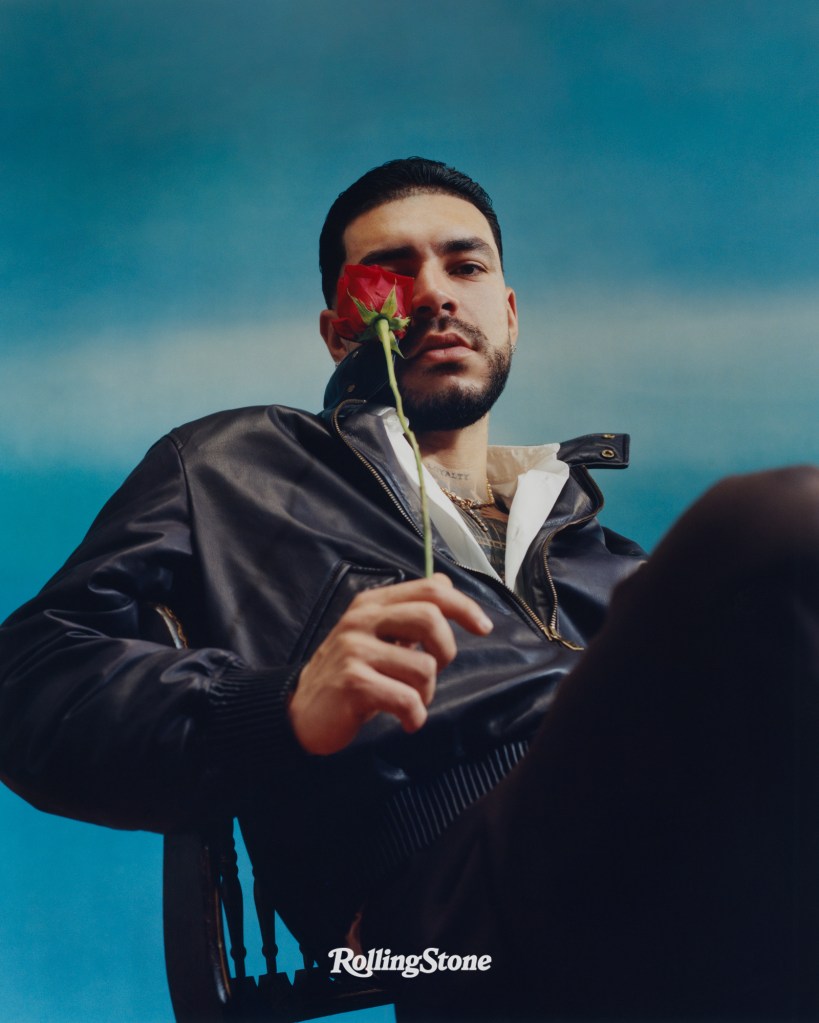
Blue Sky–BALVIN Jacket by BURBERRY. Shirt by ZENGA. Pants by SAINT LAURENT. Shoes by LOUBOUTIN. Necklace by UNIFORM OBJECT. Watch AUDEMARS PIQUET.
CASTRO Outfit by LOUIS VUITTON. Shoes by FERRAGAMO. Watch by JACOB AND CO. Necklace, Bracelet and Ring by UNIFORM OBJECT.


GIPHY App Key not set. Please check settings